Analyzing Bonus Structures and Their Ties to Extended User Activity on Licensed Gambling Platforms
Written by Greta Berger · Aug 25, 2026
Analyzing Bonus Structures and Their Ties to Extended User Activity on Licensed Gambling Platforms
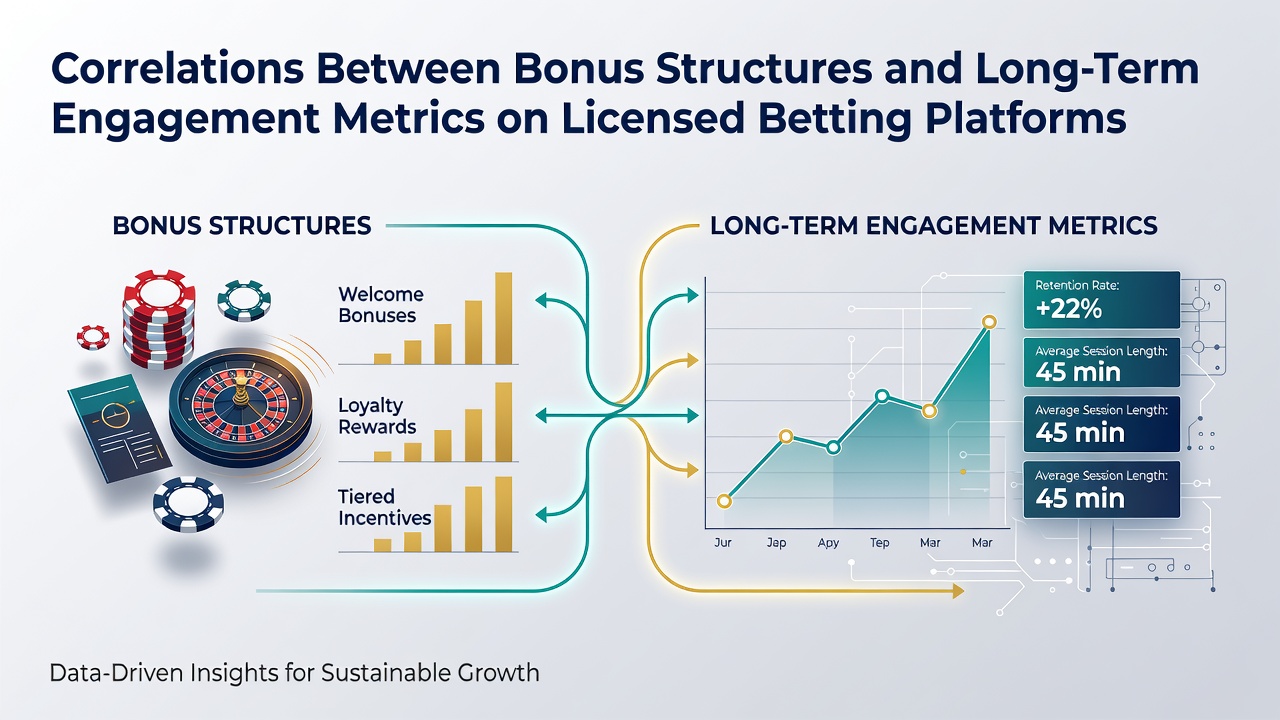
Bonus structures on licensed betting platforms include welcome offers, deposit matches, free spins, cashback programs, and tiered loyalty rewards, while long-term engagement metrics track repeat login frequency, average session duration, deposit consistency, and churn rates over six to twelve months. Data from multiple jurisdictions shows these elements often intersect in measurable ways, with operators adjusting incentive designs based on observed patterns in user behavior. Researchers tracking platform analytics note that certain bonus types align with higher retention figures, though outcomes vary by region and regulatory framework.
Common Bonus Categories and Their Design Elements
Operators deploy welcome bonuses as initial deposit matches ranging from 50 to 200 percent, subject to wagering requirements between 20x and 50x, whereas loyalty schemes accumulate points through regular play that unlock escalating benefits such as personalized reloads or exclusive event access. Cashback structures return a percentage of net losses weekly or monthly, and free bet promotions target specific events or game categories. Studies from academic institutions indicate that bonuses with lower wagering multipliers tend to correlate with steadier deposit patterns, since players encounter fewer barriers before converting promotional funds into continued activity.
Key Engagement Metrics Monitored by Platforms
Long-term metrics encompass monthly active users, average revenue per user over time, session frequency, and lifetime value calculations. Platforms also record metrics like bonus redemption rates alongside post-redemption deposit velocity to identify whether incentives sustain or merely spike short bursts of activity. Industry reports compiled by research groups reveal that engagement often stabilizes when bonuses integrate with personalized triggers, such as tailored offers sent after a period of reduced logins.
Observed Correlations in Available Data
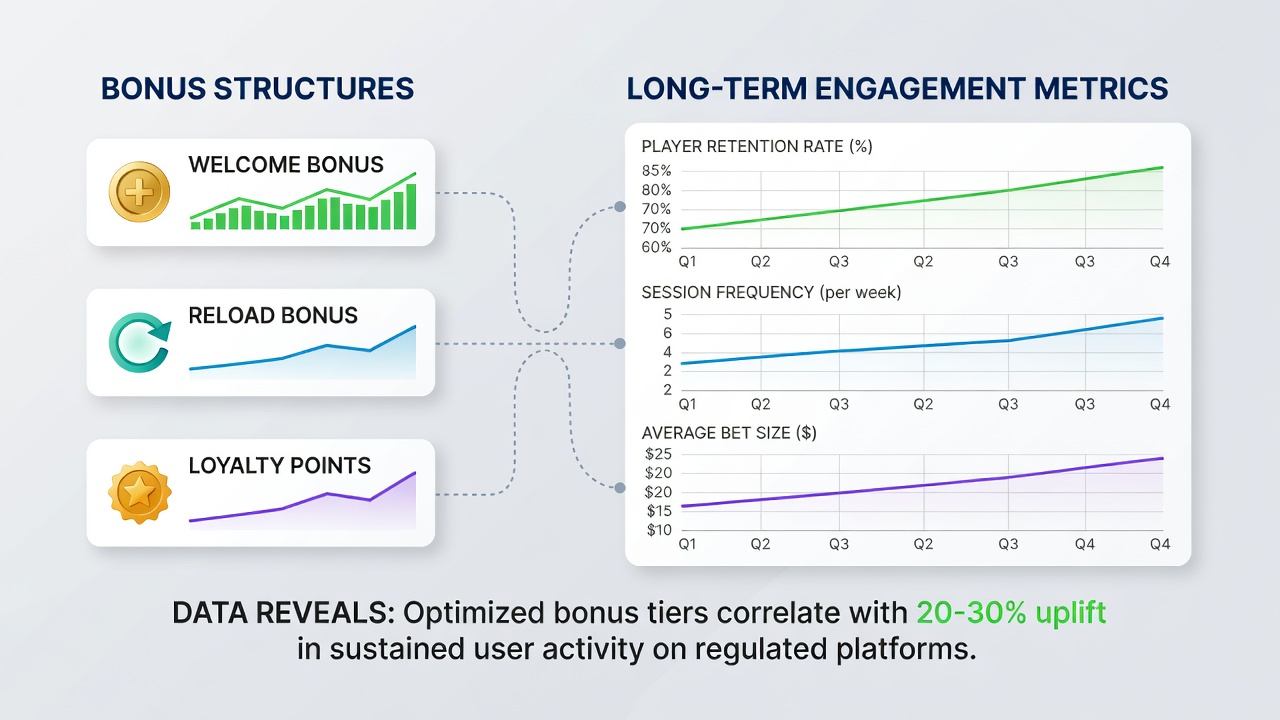
Analysis of aggregated platform statistics points to positive associations between tiered loyalty structures and reduced churn, because players who progress through reward levels show higher rates of consistent deposits across multiple quarters. Cashback programs frequently link to prolonged session lengths, since users receive direct returns that offset losses and encourage further play within the same cycle. Yet data also highlights that overly generous welcome bonuses without sufficient playthrough conditions sometimes produce elevated initial engagement followed by quicker drop-off once requirements complete. Observers tracking these trends note the pattern appears across licensed operators in several markets.
Regional Variations and Recent Developments
Regulatory environments shape how bonuses influence metrics, with stricter oversight in certain jurisdictions requiring clear disclosure of terms that can affect redemption behavior. In August 2026, updated participation figures from the Nevada Gaming Control Board indicated steady growth in remote wagering activity, with operators reporting adjustments to bonus parameters that aligned with sustained user metrics rather than one-time spikes. Similar patterns emerge in Canadian provincial data, where loyalty integrations showed measurable lifts in repeat engagement compared to standalone promotional offers.
One study released by researchers at the University of Nevada examined several licensed sites and found that platforms combining cashback with loyalty tiers maintained higher average session durations across a twelve-month window, whereas sites relying primarily on high-value welcome bonuses experienced more variability in long-term retention. Those findings underscore how structure matters more than headline amounts when operators seek stable engagement.
Platform Adjustments and Measurement Practices
Operators refine bonus parameters through A/B testing that compares cohorts exposed to different incentive models, monitoring shifts in metrics such as days between deposits and total wagers per active user. Data indicates that integrating behavioral triggers, like offering reload bonuses after three consecutive inactive days, often produces steadier login patterns. Industry associations have documented cases where platforms reduced bonus frequency yet maintained engagement levels by increasing personalization, suggesting that relevance plays a stronger role than volume alone.
Conclusion
Correlations between bonus structures and long-term engagement metrics on licensed platforms rest on observable data patterns rather than isolated promotions, with loyalty tiers and cashback mechanisms frequently aligning with steadier retention figures across multiple reporting periods. Regulatory updates and academic analyses continue to inform how operators calibrate these tools, while regional differences highlight the need for context-specific approaches. As platforms refine measurement techniques, the relationship between incentive design and sustained activity remains a central focus for data-driven adjustments.