Geolocation Verification Systems: Controlling Access to Regulated Online Gaming Platforms
Written by Greta Berger · Aug 15, 2026

Geolocation Verification Systems: Controlling Access to Regulated Online Gaming Platforms
Geolocation verification systems operate as the primary gatekeepers for licensed online gaming markets by confirming that users reside within jurisdictions where operators hold valid authorizations, and data from regulatory reports shows these tools combine IP address analysis, GPS signals, and Wi-Fi triangulation to enforce geographic boundaries with increasing precision. Operators deploy multiple verification layers because single-method approaches often fail under sophisticated circumvention attempts, while regulators in various regions require documented compliance records that detail every location check performed during account sessions.
Technical Mechanisms Behind Location Checks
Systems begin with IP database cross-referencing that maps addresses against licensed territory lists, yet they layer additional signals such as device GPS coordinates and cellular tower data to reduce false positives from VPN usage or proxy servers, and research from industry technology providers indicates that hybrid models achieve accuracy rates above 99 percent when calibrated correctly. Developers integrate real-time database updates because licensing zones shift with new legislation, while network latency considerations force many platforms to cache location results for short intervals before triggering fresh verifications.
Advanced implementations also monitor behavioral patterns including connection speed changes and device movement to flag potential location spoofing, although these secondary checks remain supplementary rather than primary because they introduce privacy considerations that regulators continue to examine. One study revealed that platforms using multi-factor geolocation experienced fewer regulatory penalties compared with those relying solely on IP methods.
Regional Regulatory Requirements and Market Effects
North American jurisdictions such as those overseen by the New Jersey Division of Gaming Enforcement mandate continuous location monitoring throughout active play sessions, whereas European frameworks administered through bodies like the Malta Gaming Authority emphasize periodic re-verification at login and during significant account actions. Australian state regulators apply similar standards with additional focus on border areas where signal overlap creates verification challenges, and Canadian provincial authorities coordinate through inter-provincial agreements that allow shared technology standards across multiple licensed markets.
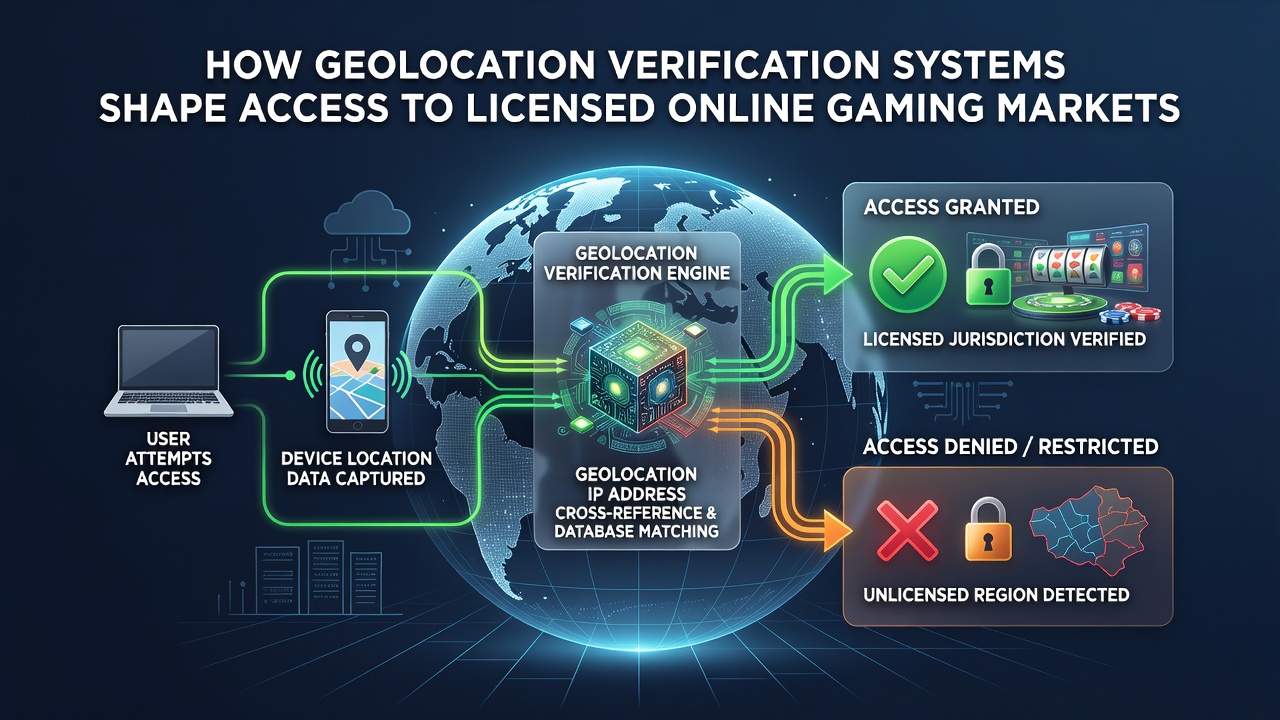
These differing requirements shape operator expansion strategies because companies must invest in jurisdiction-specific technology stacks rather than deploying uniform global solutions, and figures from trade associations show that compliance costs for geolocation infrastructure represent a growing share of operational budgets. Markets that maintain strict verification protocols report higher player trust metrics according to surveys conducted by research institutions, while regions with looser standards experience elevated rates of player migration toward unlicensed alternatives.
Challenges and Circumvention Patterns Observed in 2026
By August 2026 operators reported increased attempts to bypass verification through residential proxy networks and modified mobile applications, prompting technology vendors to release updated detection algorithms that identify anomalous connection signatures more rapidly. Regulators responded by issuing updated guidance documents that require operators to maintain audit trails documenting every failed verification attempt along with subsequent remediation steps taken.
Industry organizations note that collaborative data-sharing initiatives among licensed operators have improved collective detection capabilities without compromising individual user privacy standards, while academic papers examining enforcement effectiveness highlight that geolocation alone cannot eliminate all access violations when paired with weak age-verification processes. Platforms that combine geolocation with additional identity checks demonstrate lower incidence of cross-border play according to aggregated compliance data.
Future Technology Developments and Compliance Trends
Emerging solutions incorporate blockchain-based location attestation methods that create tamper-resistant records of verification events, and pilot programs in select North American and European markets have demonstrated reduced dispute rates when these records become available for regulatory review. Hardware manufacturers continue to embed secure location modules directly into mobile devices, which simplifies verification for operators while shifting some technical responsibility toward device makers.
Regulatory bodies across multiple continents have begun exploring standardized reporting formats for geolocation performance metrics, a move that could streamline compliance across borders although full harmonization remains distant. Observers note that continued investment in verification accuracy will determine whether licensed markets maintain their competitive position against unlicensed platforms that ignore geographic restrictions entirely.
Conclusion
Geolocation verification systems continue to define the operational boundaries of licensed online gaming by linking technological capability directly to regulatory compliance requirements, and their evolution reflects ongoing tension between enforcement needs and user experience considerations across diverse international markets. Data from multiple regulatory sources demonstrates that effective implementation correlates with stable market growth, whereas inconsistent application creates opportunities for unlicensed operators to capture player attention. The trajectory through late 2026 suggests further refinement of detection methods alongside gradual movement toward interoperable standards among major licensing jurisdictions.